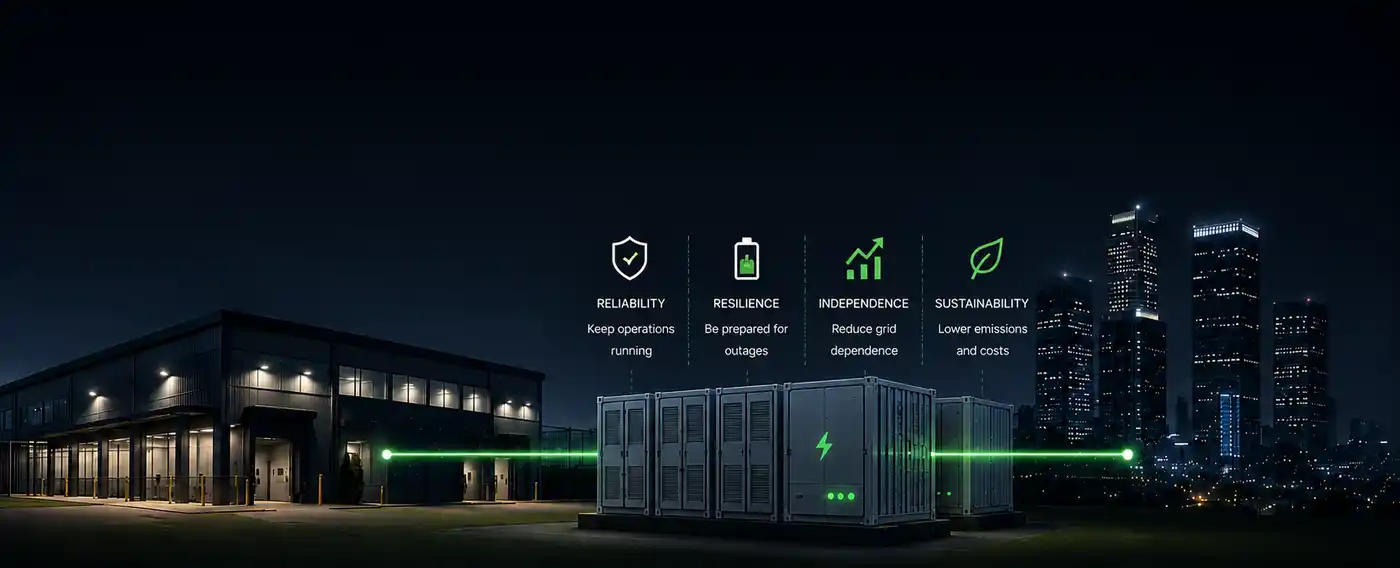
Energy independence means reducing or eliminating reliance on the electric grid.
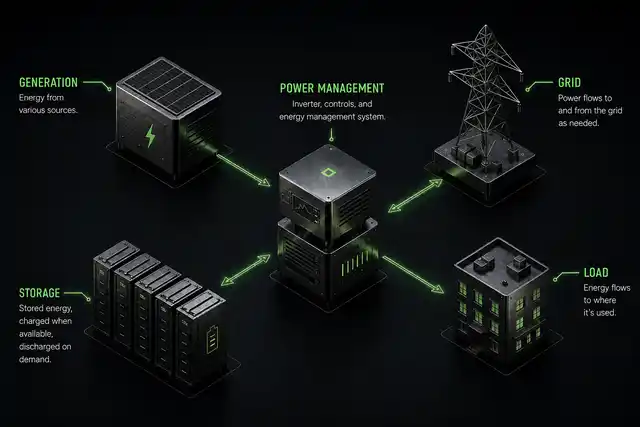
We engineer systems that generate, store, and manage your own energy — eliminating dependence by design.
See where you land — no commitment. Just clarity.
The technology follows the independence target. Not the other way around.
System Status
LIVE
SOLAROPTIMIZING
STORAGE90% CHARGED
EVCONNECTED
GRIDINDEPENDENT
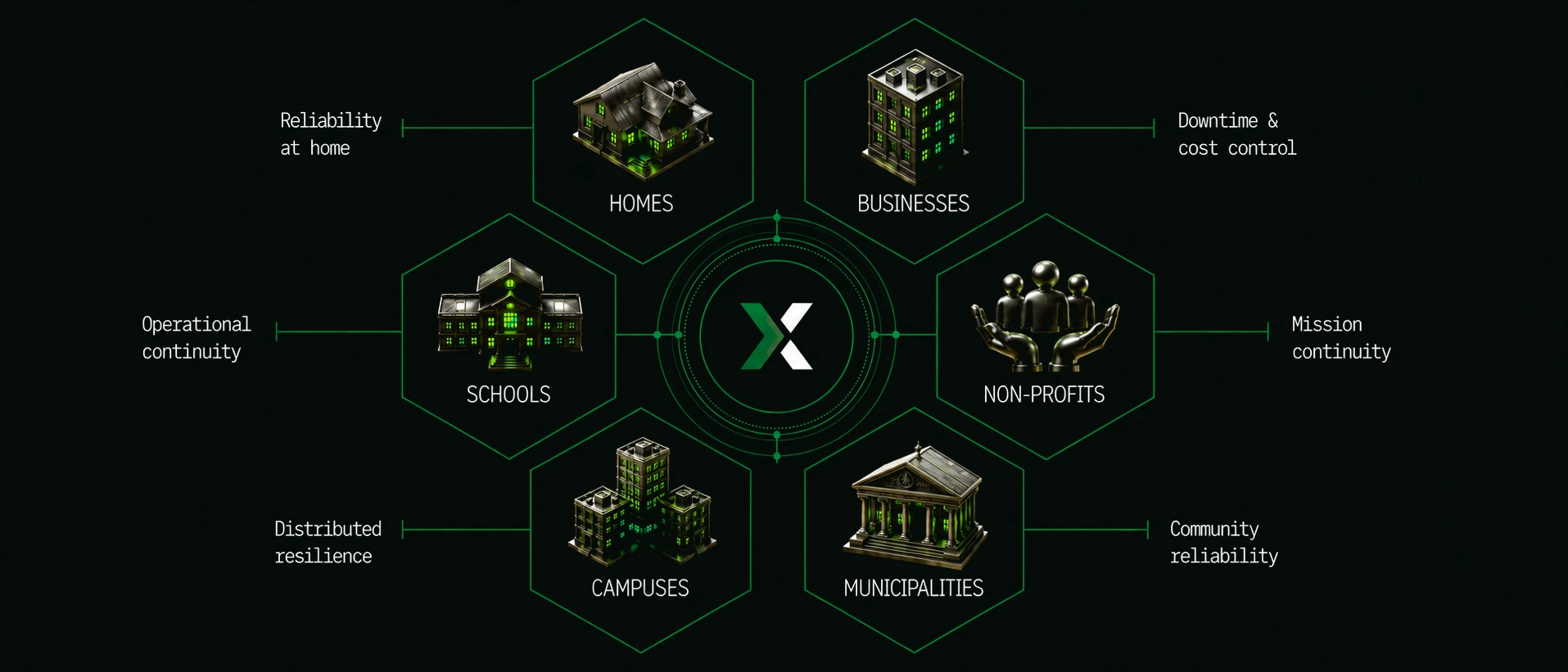
Engineered for homes, businesses, schools, campuses, municipalities, and non-profits.
Systems are sized to actual site load and runtime targets — not generic estimates.
CertifiedNABCEP · NYSERDA
RegionNY · NJ · CT
Experience30+ Years Combined
OversightLicensed Engineering
The Reality
The operating environment is changing.
01 / GRID
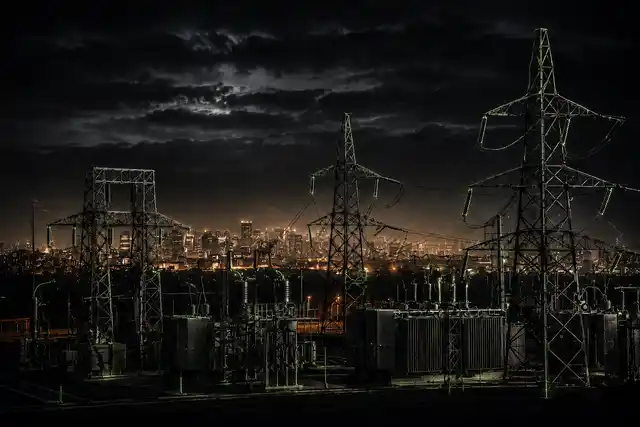
Grid reliability is under strain.
Aging infrastructure, a rise in extreme weather, and growing demand are reducing consistency across operating conditions.
02 / IMPACT
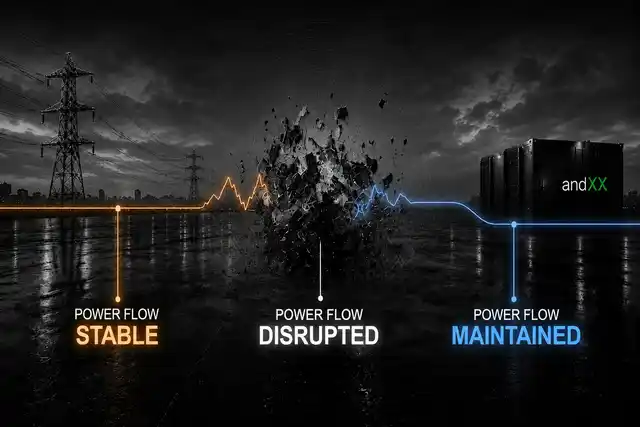
Interruptions carry real impact.
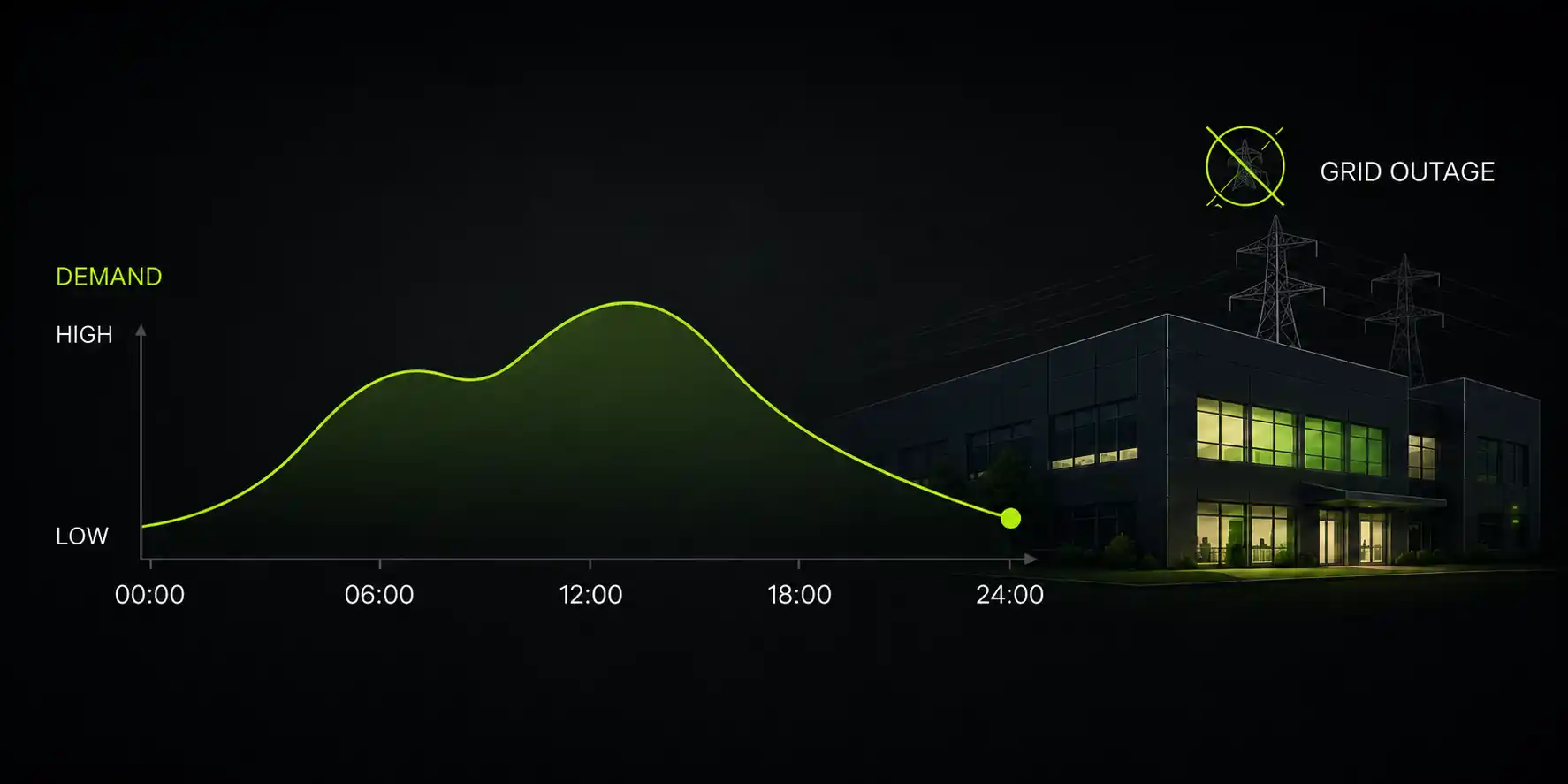
Outages are no longer rare events — they disrupt operations, productivity, and continuity when they occur.
03 / EXPOSURE
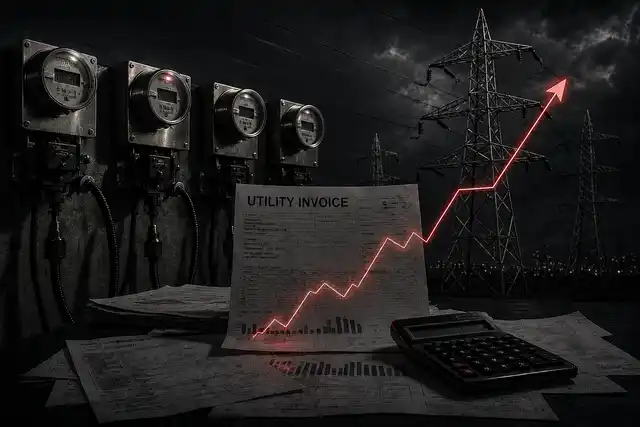
Exposure continues to increase.
Utility rate increases and demand charges hit the P&L every month. Without on-site generation and storage, that exposure compounds.
Under those conditions, the question worth asking is what it would take to operate independently.
Tools Hub
Start with the numbers.
Two calculators measure exactly what your site requires — generation, storage, and runtime — so you know what independence would take before any design work begins.
The Energy Independence Evaluation
Clarity first. Precision next.
The evaluation is designed to show where you stand today, what level of independence is realistic for your situation, and what it would take to move further.
01
Start from where you are
The tools work whether you are starting from zero, evaluating an existing system, or trying to understand why your current setup falls short during outages or high-demand periods.
02
See what independence would require
Generation, storage, runtime, and load behavior are translated into practical system requirements so you can see what your target would actually demand.
03
Get results grounded in actual use
The output reflects how homes, businesses, schools, campuses, municipalities, and non-profits consume power — so the results are decision-ready, not built on best-case scenarios.
This is not a quote request or a generic sales funnel. It is a way to define what independence would require before design and equipment decisions begin.
Who We Serve
Built for how your site runs.
The same engineering standard applies at every scale, from a single home to a multi-building municipal campus.
Independence. Engineered.
Your energy. Your rules.
Tell us about your site — independence starts here.
Tools Hub
Start with the numbers.
Use the calculators to measure what your site would need, how much storage is required, and what level of independence is technically within reach.
EIC · Calc Engine Ready · v2.76
Energy Independence Calculator
Enter your monthly energy usage and bill. We estimate the solar and storage system you'd need, model your independence level, and compute your scores.
→Size or assess solar + storage requirements based on location, usage, and outage tolerance
→See what level of independence is realistically achievable
→Cost ranges, NY/NJ/CT incentives, payback, lifetime ROI
Results are planning estimates. Final design and performance depend on site assessment, permitting, and utility rules.
BRC · Runtime Engine Ready · v1.3
Battery Runtime Calculator
Find out how long your battery will last in an outage — or how much battery you'd need to reach your backup goal. No guesswork. Just math.
→Test whether a selected battery can support your critical loads
→Separate power limits from energy limits so sizing is not guesswork
→Residential, commercial, and large-scale storage planning
No solar recharge assumed during outages — intentionally conservative. Verify final design with your licensed installer.
Calculation Engine Readyv2.76
Privacy NoticeandXX Energy does not collect, store, or sell any information entered into this tool. This is not a quote request or a sales funnel — it's a way to understand what real energy independence would require before any design or equipment decisions are made.
Energy Independence Calculator
See how close you are to full energy independence, and exactly what it would take to close the gap — whether you're starting fresh or already have solar and storage in place. The result: power that's resilient, predictable, and yours.
1Fill in what applies
2Click "Run the Numbers"
3View results
Profile TypeHome
State—
Property Address—
Choose a Profile iSelect the option that best matches your property. School, Hospital, and Warehouse/Industrial use segment-specific equipment lists instead of the residential appliance list.
Is this hospital nonprofit/government-owned, or for-profit?iDetermines which federal incentive mechanism applies: nonprofit and government hospitals receive the credit as a direct cash refund (Section 6417); for-profit hospitals use the standard commercial tax credit instead. Leave on "Not sure" to see the guaranteed 30% credit amount — it's the same dollar figure either way. Select your hospital's actual status above to confirm which mechanism applies and see whether an additional depreciation benefit (for-profit only) is available on top.
Enter Your Information
State
iYour state determines the solar production factor and which incentive programs apply.
Property Address
iEnter your property address for a more accurate solar estimate tailored to your specific location.
Your location helps us calculate accurate solar production and available incentives.
Current Solar (kW)
Other On-Site Generation (kW)
iWind, CHP, or any other generation source already installed, separate from solar. Uses a rough placeholder production estimate, not a verified source-specific model the way solar does — treat this contribution as directional, not precise.
Current Storage — Usable (kWh)
Current Inverter (kW)
Usage & Bill
Monthly Usage (kWh)
Monthly Bill ($)
Utility Rate ($/kWh)
iLeave blank to auto-calculate from usage + bill. Fill any two fields and the third updates automatically.
Independence Target
Independence Target (%)
iMost clients target 100%. Adjust down if partial independence is the goal.
Outage Coverage
Desired Backup Duration (hours)
iEnter any value — 24 hrs, 72 hrs, 168 hrs (1 week), etc. No limit.
Critical Load (kW)
iThe essential load you need to keep running during an outage — refrigeration, lighting, medical equipment, critical operations, etc.
Battery Level When Outage Begins (%)
iThe charge level your battery will be at when the outage begins. 100% assumes a fully charged system.
Do Not Drain Below (%)
iYour usable backup power = battery level when outage begins minus this floor. At 100% start and 10% floor, you have 90% of capacity available. Typically set to 10–20% to protect battery health.
Critical Appliances & Equipment — Load BuilderChoose loads to run during an outage
▼
Real-world defaults pre-loaded. Adjust quantities, zero out what you won't run during an outage.
Appliance
Watts
Qty
Running W
Load Builder Total:0.00 kW | 0 W
Wattages are typical running loads. All selected loads are assumed to run simultaneously at full power (conservative estimate). Actual usage varies — confirm with your installer.
Battery Operating Rates
For more accurate savings estimates
Enter your rates below for a more accurate result. All fields are optional — defaults are pre-loaded for NY (Con Ed territory), NJ, and CT based on published utility rates for your state. Actual rates vary by utility, rate plan, and customer class. Leave blank to skip this calculation; battery operating savings will not be included unless rates are entered.
Off-peak rate ($/kWh)
iWhat you pay the utility during low-demand hours (typically nights and weekends). Battery charges during these hours when solar isn't available.
Peak rate ($/kWh)
iWhat you pay the utility during high-demand hours (typically late afternoon and evening). Battery discharges during these hours to avoid this rate.
Solar export rate ($/kWh)
iWhat the utility pays you for excess solar sent back to the grid. NEM 3.0 in CA, VDER in NY, full retail in NJ. Without a battery, excess solar is sold at this rate. With a battery, excess solar can be stored and used at the peak rate instead.
Demand charge ($/kW/month)
iCommercial utility bills include a demand charge based on the highest 15-minute power draw each month. Battery storage can shave these peaks, eliminating most of this charge. This is often the largest dollar benefit on commercial systems.
Inverter cost ($/kW) — override
iLeave blank to use a general estimate. If you have a real supplier quote for a commercial-scale inverter, enter it here and the tool will use your number instead of the estimate.
Peak demand reduction (kW)
iHow much the battery can shave off your monthly peak. Auto-calculated from battery power rating and critical load — override if you have a specific target.
Select a Result
Independence
Current System
Energy Gen & Storage
Backup Runtime
Financial Picture
INDEPENDENCE %
—→—
Enter your details and click Calculate.
SOLAR
—
STORAGE
—
CURRENT SYSTEM INDEPENDENCE PERCENT
—→—
BACKUP RUNTIME (HRS)
—
—
Show details
Solar / Generation
—
Storage
—
Backup
—
Critical Load
—
System Recommendation
How It's Calculated
System Recommendation
Current System Detail
System Details
These are planning estimates based on regional cost data and current incentive programs. Actual costs depend on your specific roof, equipment selection, installation complexity, and current installer pricing. Final numbers come from a site-specific quote — these are for your own planning before that conversation.
Solar Only — Cost & Payback
Low/high range & 10/25-yr ROI▼
Battery Only — Cost & Payback
Low/high range & operating savings breakdown▼
Combined — Cost & Estimated Eligible Incentives
Full incentive breakdown & 10/25-yr ROI▼
Have a real incentive number the tool doesn't know about (a utility rate you confirmed by phone, a program not yet built into this tool)? Add it here — it will be included in the total below.
Results are calculated using real consumption inputs and regional production modeling.Estimates are for planning only. Final design and performance depend on site assessment, permitting, and utility rules.
Runtime Engine Readyv1.4
Battery Runtime Calculator
Find out how long your battery will last in an outage — or how much battery you'd need to reach your backup goal. No guesswork. Just math.
Choose a Mode
Size My BatteryTell us your critical loads and target backup hours — we calculate the battery size you need.
Check Existing BatteriesEnter your existing battery specs and critical loads — we calculate how long you'll actually last during an outage.
Battery Preset (optional)
iSelect a known battery model to auto-fill specs. Switch between residential and commercial presets.
Backup Target (Hrs)iHow long you need to power your critical loads during an outage. Common targets: 24 hrs, 48 hrs, 72 hrs, 168 hrs (1 week).
Critical Load
Manual Entry (kW)
iEnter the total power draw of everything you want to keep running during an outage. Or use the Load Builder below to calculate it from individual appliances.
Critical Equipment — Load BuilderSelect what you need to run during an outage
▼
Real-world defaults pre-loaded. Adjust quantities, zero out what you won't run during an outage. All selected loads are assumed to run simultaneously — this is the safe planning assumption.
Appliance
Watts
Qty
Running W
Load Builder Total:0.00 kW | 0 W
Wattages are real-world typical draws. Always confirm with your licensed installer or EPC contractor.
Battery Specifications
Number of Batteries
iTotal number of battery units in your system.
Battery Capacity (kWh)
iThe kWh number on the manufacturer's spec sheet — for example, a Tesla Powerwall 3 is 13.5 kWh. We automatically apply real-world usable capacity in the math.
Total system capacity:— kWh nameplate / — kWh usable
Continuous Power per Battery (kW)
iMaximum sustained power output per battery unit. From the manufacturer spec sheet.
Total system power:— kW continuous
Surge Power per Battery (kW) — optional
iPeak power for short bursts like motor startups. Leave blank if unknown.
Total surge power:— kW surge
Battery Charge When Outage Begins
How full is the battery when an outage hits? Pick the option that reflects how you use the system.
Battery Charge at Outage Start (%)
iBatteries used for daily energy savings (solar or peak/off-peak rate optimization) are often not fully charged when an outage occurs. Select a preset above or enter a custom value.
Do Not Drain Below (%)
iThe minimum charge level before the battery stops supplying power. Typically 10–20% to protect battery health and longevity.
System Age & Environment
Optional — powers the Runtime Confidence figures in Battery System Details below. Only available for researched battery models.
Years in Service
Install Temperature (°F) — optional
Your Results
Battery Runtime Assessment
Choose a mode and run the calculator.
Runtime
—
Hours of backup power
Power OK
—
Load vs battery power
Target
—
% of target hours met
Runtime Results
Power Analysis
Checks & Validation ▼
How the Numbers Work ▼
Battery System Details ▼
Batteries are often used daily to reduce peak electricity costs.This usage affects how full your battery is when an outage occurs — adjust the charge presets above to match your real-world use. For cost and savings analysis, use the Energy Independence Calculator.
Runtime is calculated from real battery specifications and your actual critical load inputs.No solar recharge is assumed during outages — this is intentionally conservative. If your system includes operational solar, real runtime will be longer. Always verify final system design with your licensed installer.
Disclaimer
Runtime projections are planning estimates. Actual performance depends on battery age, temperature, load variability, inverter efficiency, and installer design. Verify all specifications with your equipment manufacturer and licensed contractor.
We don't push solar — we engineer energy independence.
Your goals first. Storage and solar sized to the runtime you need and the control you want.
Our Solutions
The Power Suite.
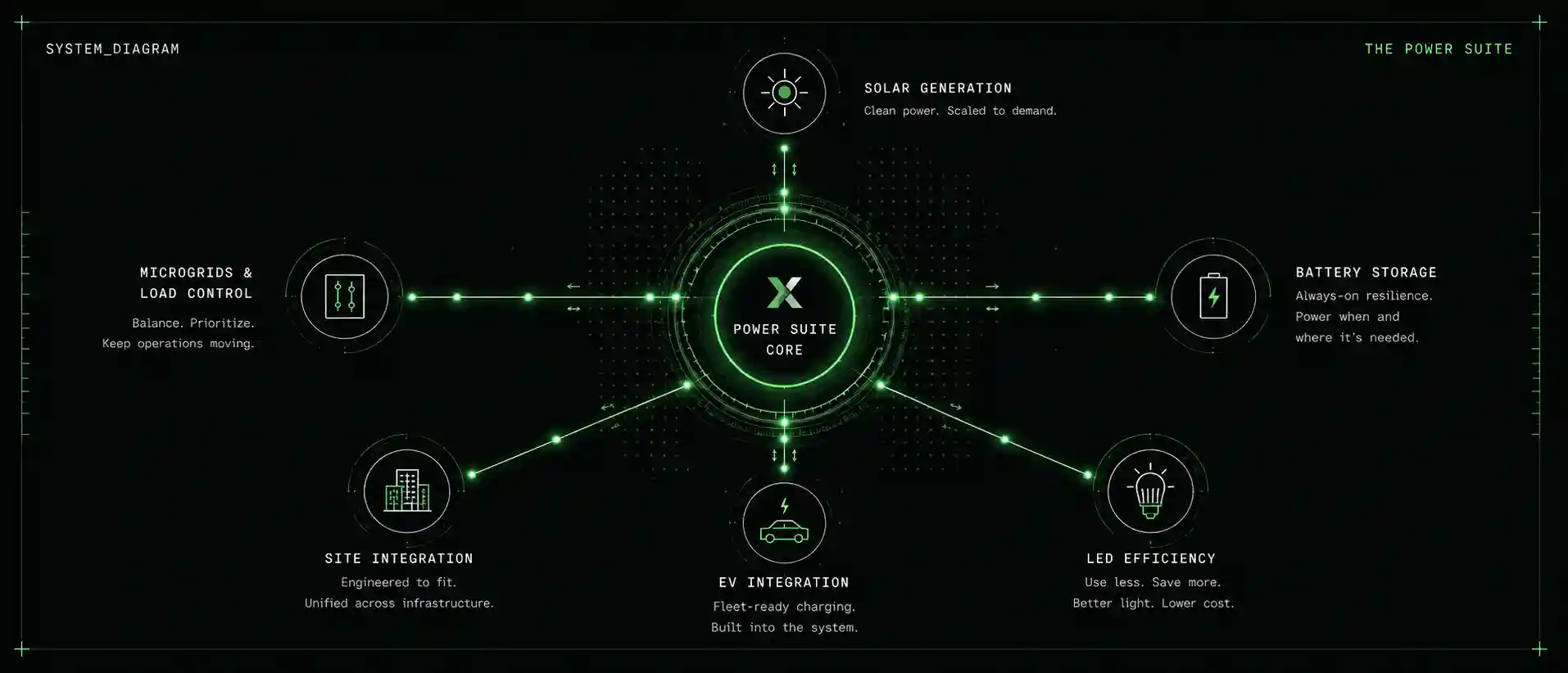
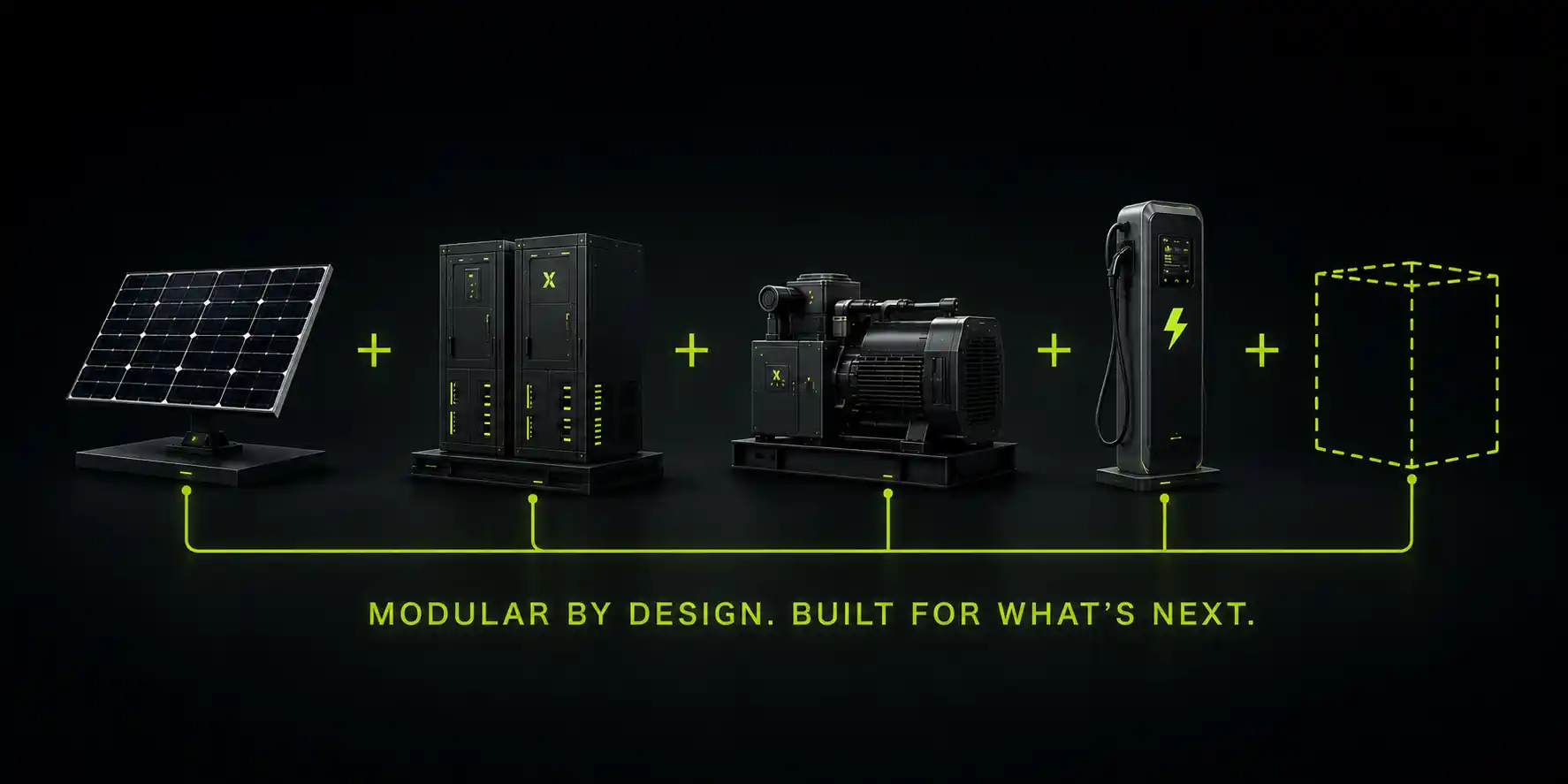
The Power Suite defines what's needed to operate independently. Generation, storage, load control, and supporting systems — applied where they improve performance, continuity, or cost. The question is always what the site requires — not what's easiest to sell.
Solar Generation
Generation at every scale
Solar sized to match actual demand. Ground mount, canopy, and rooftop configurations.
Battery Storage
Always-on resilience
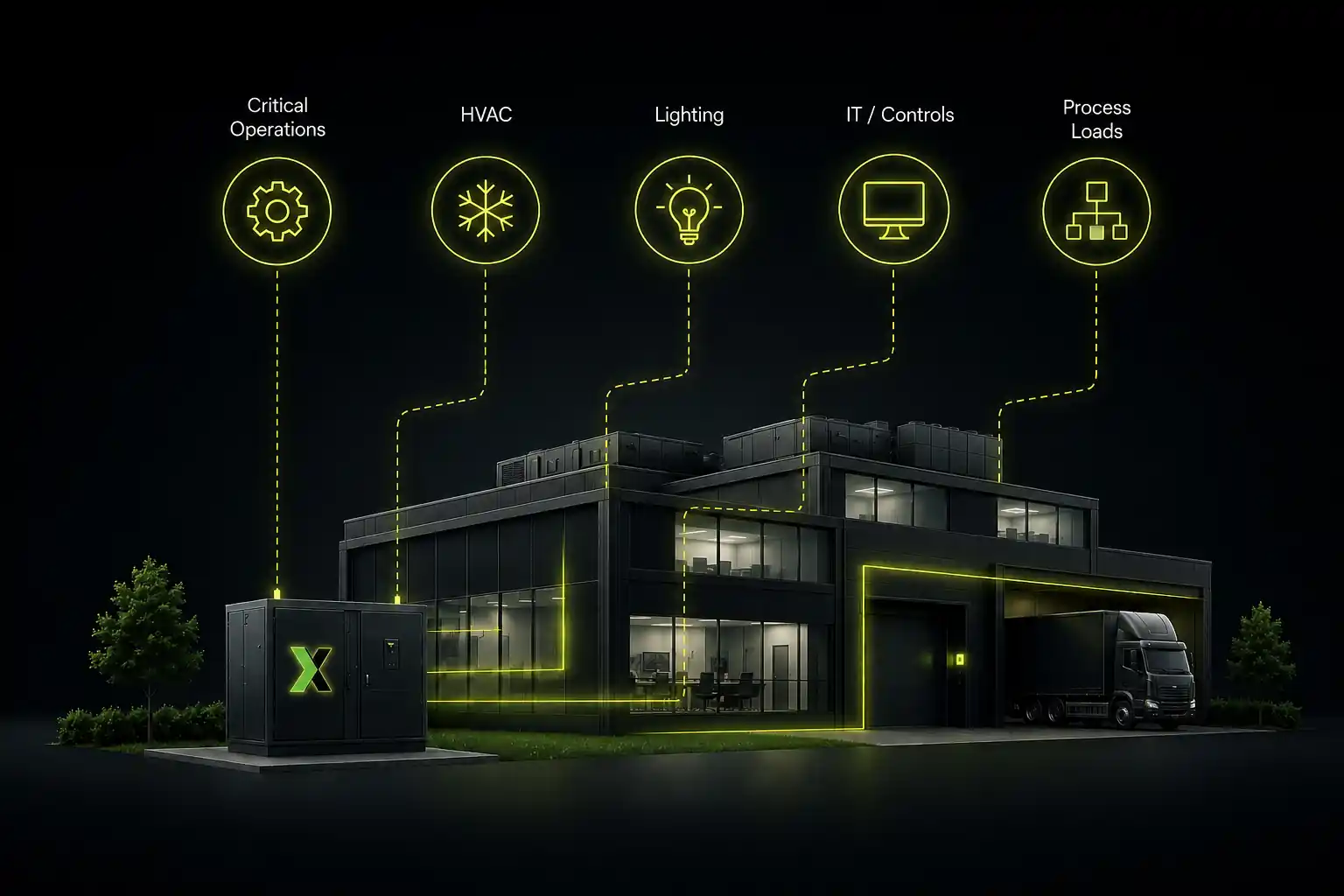
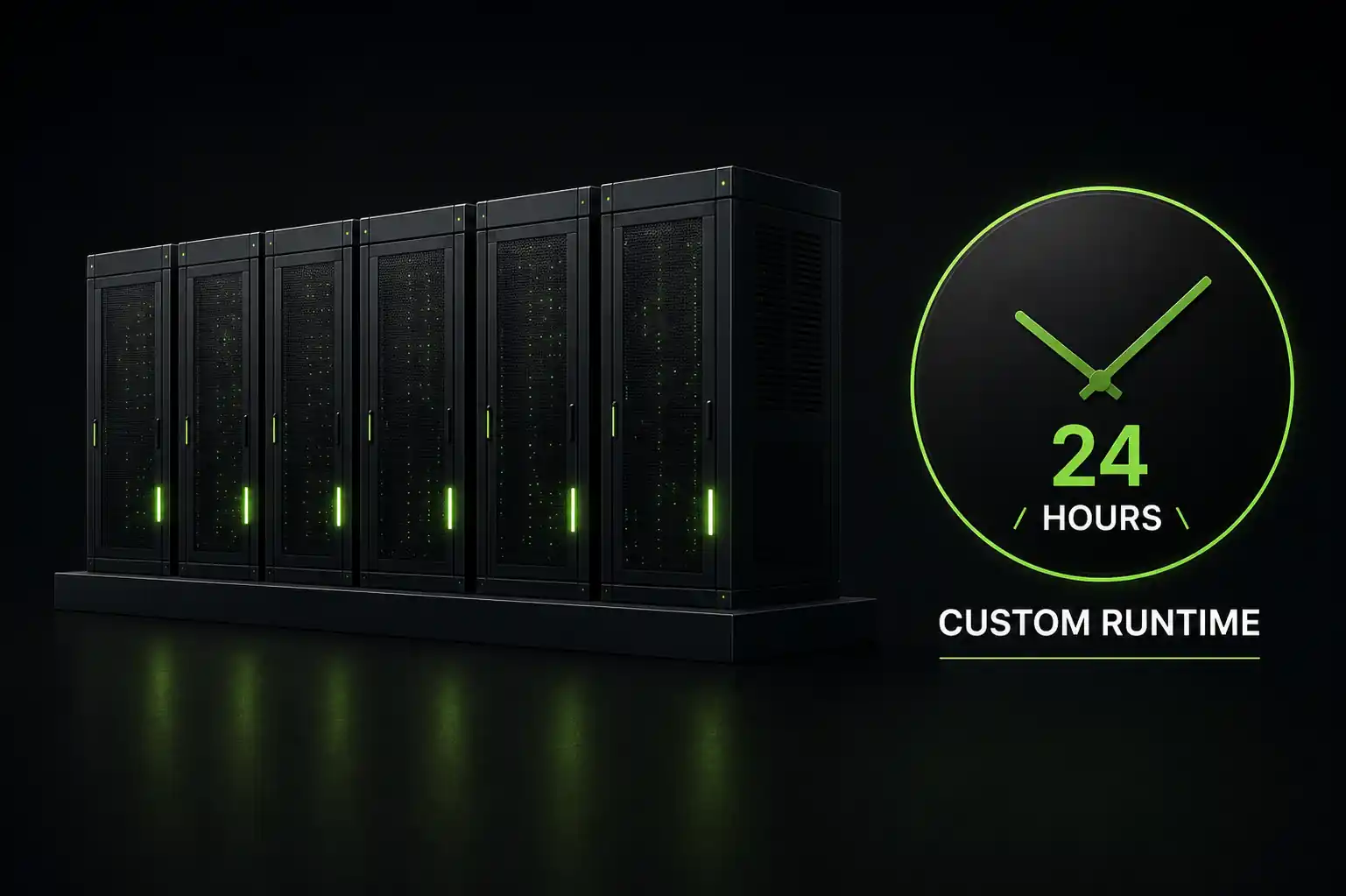
Storage that keeps critical operations running during outages. Sized around required runtime.
EV + Integration
Fleet-ready infrastructure
EV charging infrastructure designed for consistent daily use. Geothermal and site integration applied where it supports operations.
Microgrids & Load Control
Continuous operation
Systems that maintain critical functions and direct power where it matters most.
Site Integration
Coordinated systems
Systems connected and aligned to operate as a unified whole where required.
LED Lighting
Less demand. Better economics.
High-efficiency lighting cuts consumption before generation is sized — a smaller, less expensive system for the same independence level.
Every technology in the Power Suite exists for one reason — to move the site further from the grid and closer to full independence.
Sample Systems
What system scale looks like.
Home
Residential
Solar6–12 kW
Battery10–20 kWh
Supports essential loads or extended runtime depending on configuration and independence goal.
Commercial
Commercial or industrial
Solar500 kW–2 MW
Battery1–4 MWh
Maintains uptime for priority operations and reduces exposure to outages and demand spikes.
Campus
Schools, campuses, municipalities
Solar250–750 kW
Battery250–1000 kWh
Supports critical infrastructure, emergency operations, and multi-building coordination.
Scope is set by demand, duration, and what the site must sustain. Ranges shown are illustrative.
Our Methodology
How we size and design.
System behavior is evaluated against measured usage. The numbers come from how the property runs — not from industry benchmarks or product defaults. That's what makes the path to independence defensible.
The andXX Energy Standard
Every system we design is rooted in how the property draws power — not in what a manufacturer's spec sheet projects or what a sales average suggests.
01 · LOAD-DRIVEN DESIGN
What stays running is defined first
What remains active during an outage is defined before system size is determined. Decisions are tied to what the property demands — not to a preconfigured package.
02 · RUNTIME SET ON PURPOSE
Storage matched to required duration
Storage is matched to how long operation must continue — not to an average that obscures what the site requires when conditions shift.
03 · DESIGNED TO ADAPT
Expansion without rework
Core architecture is designed to accept expansion and new inputs as requirements evolve — additional generation, storage, or EV infrastructure incorporated without rebuilding from scratch.
04 · RESULTS FOLLOW DEMAND
Performance tied to consumption
System performance depends on how power is consumed over time — and how the system is expected to behave when the grid doesn't cooperate.
Future Ready
Designed for the next decade.
Architecture chosen today determines whether the site can adapt as conditions change — or has to be rebuilt to keep up.
andXX Energy READY
POWER99.99%
BACKUPREADY
GRIDACTIVE
V2GREADY
FORWARD CAPABILITIES ENGAGED
01 — V2G
→
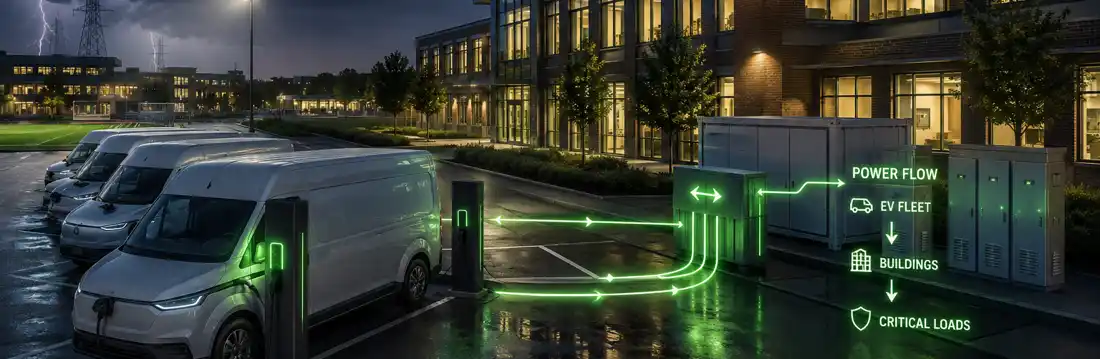
EV fleets as mobile backup
Connected EVs feeding power back to buildings during outages and demand events. Particularly relevant at the district and campus scale.
STATUS · V2G-READY HARDWARE
SCALE · DISTRICT / CAMPUS
HORIZON · DEPLOYABLE NOW
02 — AI OPT.
→
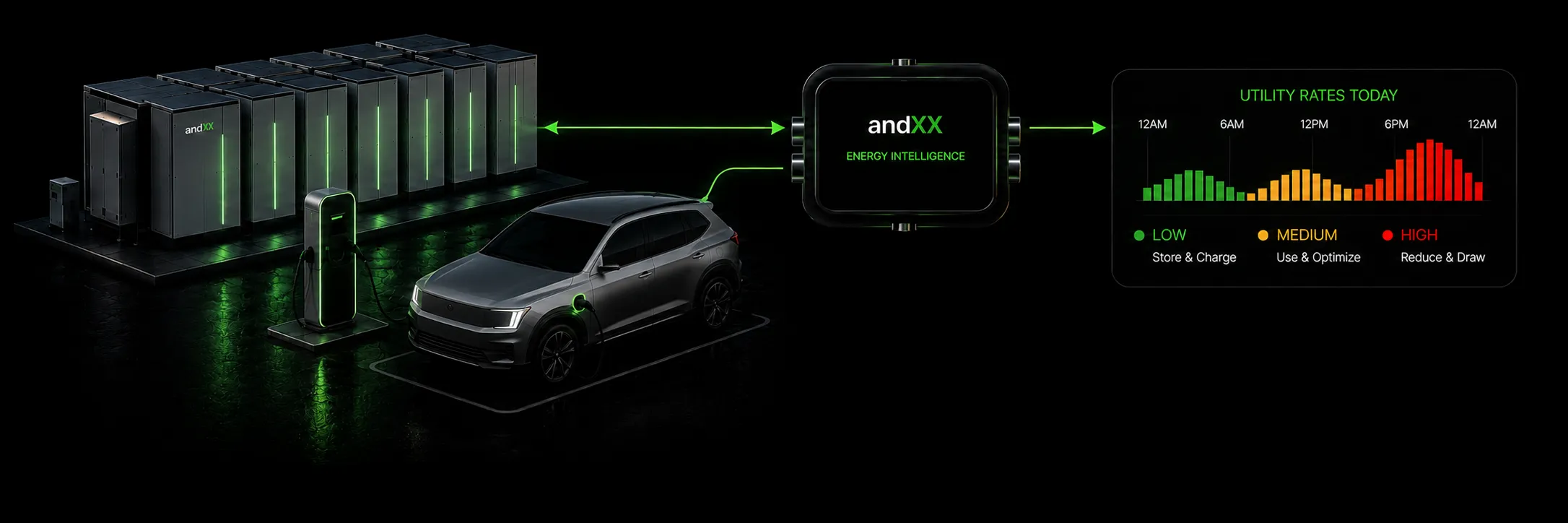
Smarter charging and storage
The system decides when to store energy, when to use it, and when to draw from the grid — based on your utility rates and what matters most to keep running. Capability depends on equipment.
STATUS · ACTIVE PROGRAMS
SCALE · ALL TIERS
HORIZON · OPERATIONAL
03 — INTEROP
→
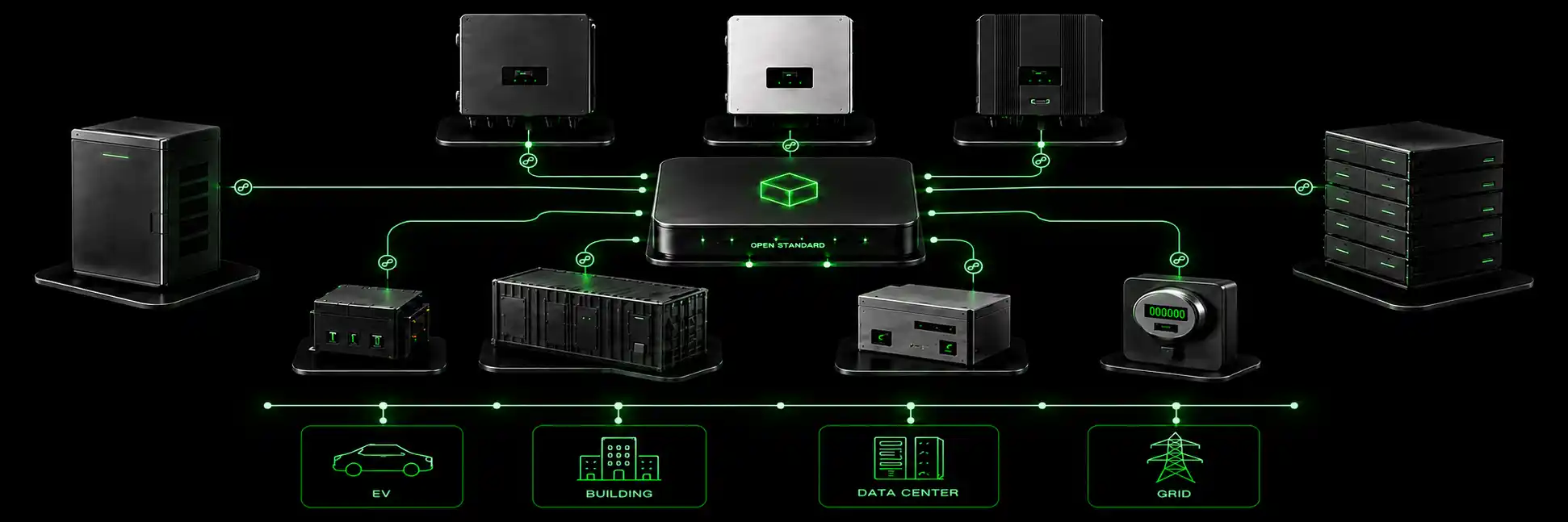
No single-vendor lock-in
Best-in-class components across inverters, batteries, meters, and BMS. Multi-vendor design specified across manufacturers — not locked to one ecosystem.
STATUS · STANDARD PRACTICE
SCALE · ALL TIERS
HORIZON · DEFAULT
Forward Capabilities · Expanded
Available today or as phased upgrades depending on system, hardware, and utility program participation.
V2G-Ready Hardware
EV infrastructure designed for bidirectional flow as standards mature.
Multi-Vendor Design
Components specified across manufacturers — not locked to one ecosystem.
Grid-Market Ready
Storage and generation specified to participate in emerging utility programs and wholesale energy markets.
Who We Serve
Built for how your site runs.
Whether the need is residential energy control, facility continuity, fleet charging, campus-wide resilience, or reduced operating exposure, the objective is the same — reduce grid dependency and take control of your energy.
Homes
Residential
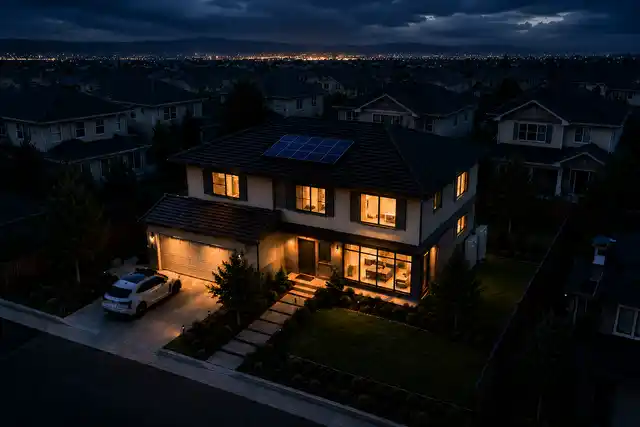
For homeowners looking to maintain power during outages, see how their current setup actually performs, and define a practical path toward energy independence.
Businesses
Businesses and facilities
For sites where uptime, operating cost, refrigeration, process loads, peak demand exposure, tenant continuity, or customer-facing reliability make outages and utility volatility more costly.
Schools
Schools and districts
For school districts managing emergency operations, continuity of learning, and shared energy infrastructure across multiple buildings.
Campuses
Corporate & academic campuses
For larger sites managing district load, fleet charging, and coordination across multiple buildings or assets where uptime is non-negotiable.
Municipalities
Municipalities
For mission-critical public sites — emergency operations, public works, water and wastewater, and continuity of services that residents depend on.
Non-profits
Non-profits
For mission-driven organizations where operating cost reduction and reliable service delivery directly support the people and communities served.
From a single home to a multi-building campus. We thrive with capital-intensive clients because our experience and expertise match the high level of competence required to satisfy the demands of these projects.
Why andXX Energy
Engineering first. Independence focused.
andXX Energy starts with a different question: not what product to sell, but what combination of systems delivers the level of independence the site requires.
The result: systems sized and configured around measured demand and real load behavior. Not around what looks good in a proposal.
Energy independence isn't about going green — it's about control, stability, and freedom from grid exposure.
OPERATIONAL
All Systems Normal
Independence
100%
Power Flow
On-Site Generation
Energy Storage
Smart Distribution
Critical Loads
Self-Sustaining. Secure. Always On.
Real-Time Metrics
Solar Output
2.41 MW
Battery Reserve
88%
Site Load
1.82 MW
Reserve Margin
36%
Power Quality
99.98%
System Efficiency
93%
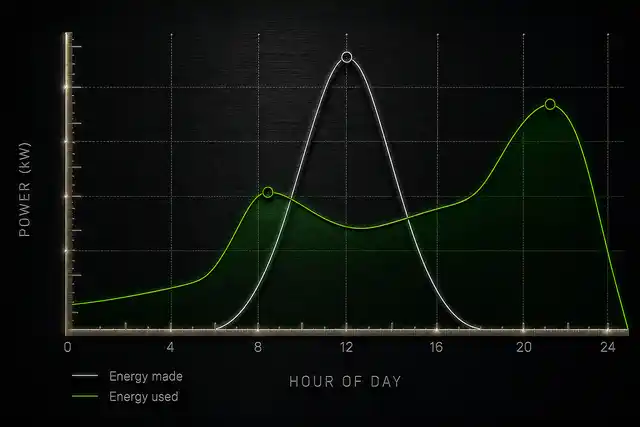
Load Profile
00:0012:0024:00
Resilience Score
98/100
Runtime On Reserve
96+ hrs
01 — NOT TECHNOLOGY-FIRST
Solar, storage, EV charging, geothermal, and controls are tools. The job is determining which combination supports how the site operates — under normal conditions and during disruption.
02 — LOAD AND RISK COME FIRST
Every site runs differently. Design starts with load behavior, peak draw, and what an interruption puts at risk — then builds from those specifics, not industry averages.
03 — NO HYPE. JUST MATH.
Start with the tools, define the target, and build around generation, storage, and control requirements sized to perform when it matters — not just when conditions are favorable.
What Sets Us Apart
Independence by design
Tailored to each site's potential.
End-to-end capability
Solar, storage, EV, geothermal, community solar, microgrids.
Future-ready
AI optimization, V2G, decentralized operations.
30+ years combined experience
Across design, engineering, and implementation.
Engineered to hold — not just on paper, but in the field, over time.
Our Name
The Meaning.
AND
→
connection and progress.
X
→
the unknown.
In math, X begins as the question. Once solved, it becomes the answer.
andXX carries both — the first X is the problem. The second X is the solved outcome.
andXX
First X
The Problem.
Grid dependence. Rising costs. Exposure to outages.
Second X
The Solved Outcome.
Generation. Storage. Control. Independence.
Frequently Asked Questions
Common questions.
About the evaluation process, how the tools work, and what to expect when you reach out.
Do I need to know my solar size?+
No. Enter your address and monthly kWh from your bill — our tool estimates solar and battery size automatically.
Where do you operate?+
We work with clients nationwide, with a primary focus on New York, New Jersey, and Connecticut.
Who does the engineering and installation?+
Every installation is carried out by qualified designers and contractors, with licensed engineering oversight where required.
Are the online estimates final?+
They're planning estimates. Final design, pricing, and performance depend on site assessment, permitting, and utility rules.
What sectors do you serve?+
Homes, businesses, school districts, corporate campuses, municipalities, non-profits, industrial and warehousing.
What about incentives and financing?+
We factor incentives/financing during proposal. The calculator focuses on sizing; proposals include payback and options.
What's the difference between the EIC and the BRC?+
Energy Independence Calculator (EIC) — Use the EIC to size or assess your solar + storage needs and determine what it would take to reduce or eliminate grid reliance.
Battery Runtime Calculator (BRC) — Use the BRC to validate backup coverage for outage scenarios or determine the storage required to power selected loads for a runtime you choose.
Independence. Engineered.
Your energy. Your rules.
Tell us about your site — independence starts here.
What You Get
Initial Assessment
How your site actually uses energy — and where the limits are.
System Design
Built around your demand profile and independence target.
Independence Roadmap
What it takes to reduce grid dependence and maintain continuity.
For CFOs and finance leads: the evaluation includes operating cost reduction, demand charge exposure, and payback context — so the numbers support the business case before any commitment is made.
Explore Your Options
Privacy Policy
Last updated: July 2, 2026
andXX Energy respects your privacy. This policy explains what information we collect through andxxenergy.com, how we use it, and the choices available to you.
Information We Collect
Contact information (name, email, phone) you provide through our contact form or when you reach out directly.
Project details (property or facility type, energy usage, notes) you share so we can prepare an evaluation.
What We Don't Collect
We do not use cookies, analytics tools, or tracking pixels.
We do not monitor which pages you visit or how you use the site.
Standard web server logs may briefly record your IP address and browser type for basic security purposes only.
How We Use Information
Respond to inquiries and generate evaluation results.
Prepare proposals or follow-up communication you've requested.
Keep records of client projects.
We do not share the contact information you provide with third parties for their marketing purposes. We will use it to respond to your inquiry and may follow up with you in the future about energy services that may be relevant to you based on your original request.
How We Share Information
We do not sell or rent your personal information.
We do not use third-party form-processing or ad-retargeting services.
We may share information with project partners (contractors, equipment suppliers, licensed trades) only as needed to carry out work you've engaged us for.
We may share information with legal authorities if required by law or court order.
Data Retention & Security
We keep contact and project information as long as needed to respond to your inquiry, and — if you become a client — for the length of the project plus a reasonable period after, for recordkeeping and warranty purposes. We take reasonable technical and organizational steps to protect the information you share.
Your Rights
Depending on where you live, you may have the right to access, correct, or delete your information, opt out of future communications, or receive a copy of your information in a portable format. Residents of California, New York, New Jersey, Connecticut, Colorado, Virginia, and other states with comprehensive privacy laws have additional rights under those laws. To exercise any right, contact us below.
Children's Privacy
This site is not directed to anyone under 16, and we do not knowingly collect information from minors. If you believe a minor has submitted information to us, contact us and we'll delete it.